Adaptive Merino™
Fabric 01Expands and contracts with your body temperature.
Analog soul. Digital nerve. The future of mid-century menswear.
Tailored confidence meets next-generation textiles: heritage silhouettes rebuilt with Adaptive Merino™, Chroma-Shift photochromics, Circuit-Weave conductive thread, Smart-Memory Wool, and Phase-Change Fiber.
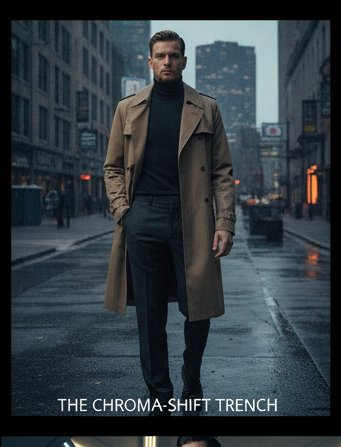
We’ve taken the tailored confidence of mid-century menswear and rebuilt it with the quiet intelligence of next-generation textiles.
This collection is designed to merge timeless menswear with functional innovation — premium garments that feel classic at a distance and engineered up close.
We are rebuilding heritage silhouettes with quiet intelligence: garments that read as classic from across the room and reveal themselves as engineered only up close.
Each piece in the collection is built around a fabric that changes how the garment behaves — not just how it looks.
Expands and contracts with your body temperature.
Photochromic fabric that shifts tone in UV light.
Conductive threads for silent wearable notifications.
The front crease is thermoset into the yarn, so it holds through wear and travel.
Absorbs excess body heat when active and slowly releases it back while cooling.
Adaptive Merino™, Chroma-Shift and Circuit-Weave carry their own entries in the fabric library; Smart-Memory Wool and Phase-Change Fiber are described within the collection below.
Each garment is priced individually and produced as part of the same limited first run.
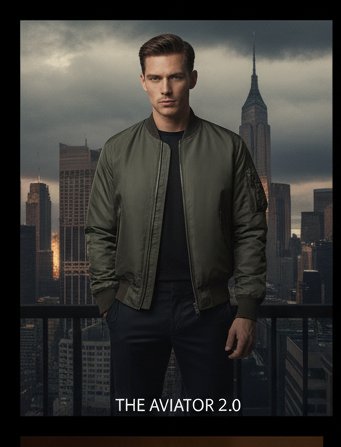
A modern MA-1 flight jacket crafted in an Adaptive Merino™ shell. The lining actively expands its fiber loft below 15°C and relaxes it above 20°C.
A weatherproof trench treated with a photochromic finish. The coat’s sandstone base deepens to a richer taupe in strong sunlight and softens indoors.
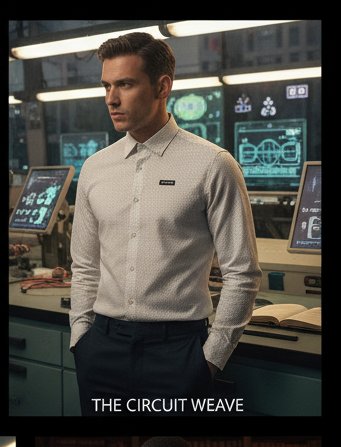
A merino-cotton poplin dress shirt. A hair-fine conductive thread runs through the cuff to pair with wearable devices for silent notifications.
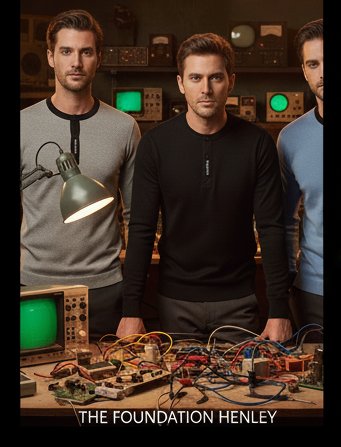
The foundational base layer knitted from 100% Adaptive Merino™, featuring seamless-body knitting for ultimate temperature regulation.
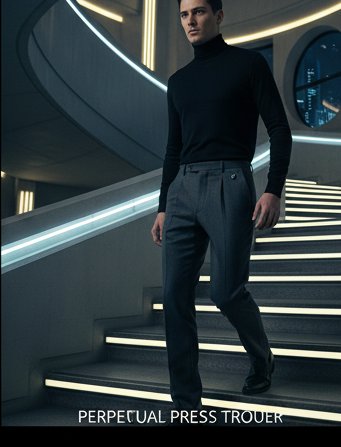
A Smart-Memory Wool trouser where the front crease is thermoset into the yarn. It survives flights and washing without a single touch-up.
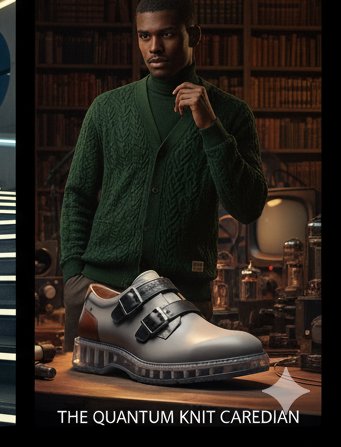
A cable-knit cardigan using Phase-Change Fiber to absorb excess body heat when active and slowly release it back while cooling.
We’ve estimated a 4×–5× markup from production to retail, which is standard for technical luxury.
| Item | Retail | Est. Material / Tech Cost | Est. Labor (CMT) | Total COGS |
|---|---|---|---|---|
| Chroma-Shift Trench | $920 | $140 (UV-reactive / sealed) | $110 | $250 |
| The Aviator 2.0 | $685 | $95 (Adaptive Merino) | $85 | $180 |
| Quantum Knit Cardigan | $540 | $80 (PC-Fiber) | $60 | $140 |
| The Circuit Weave | $310 | $45 (Conductive thread) | $35 | $80 |
| Perpetual Press Trouser | $265 | $35 (Thermoset wool) | $30 | $65 |
| Foundation Henley | $195 | $25 (17.5m Merino) | $20 | $45 |
Total estimated startup needed: $120,000 – $150,000, to produce a limited run of 50–100 units per style.
To bring this engineered heritage to life, we need to meet high minimum order quantities for these bleeding-edge smart fabrics. Here is our breakdown.
Total initial goal to reach first production.
Backed by the launch & development budget of $120,000 – $150,000.
| Category | Estimated Cost |
|---|---|
| Tech Packs & Prototyping | $15,000 |
| Fabric Minimums (MOQs) | $40,000 |
| First Production Run | $65,000 |
| Packaging & Logistics | $10,000 |
The allocation above, opened up line by line. Where the source document gives a range, the midpoint is used to draw the share bar — so the bars total 100% of the itemised budget.
| Line item | Amount | Share of $130,000 goal |
|---|---|---|
| First Production RunCMT & bulk assembly | $65,000 | |
| Specialty Fabric MOQs300–500 m minimum per order | $40,000 | |
| Prototyping / Sampling~3× production cost on first runs | $10,000+ | |
| Packaging & Logistics | $10,000 | |
| Tech Packs & Patternscomplex — smart-textile integration | $5,000 – $8,000 | |
| E-commerce, Photography & Marketingweb, shoots, advertising | $5,000 – $15,000 | |
| Total itemised (six lines, midpoint) | $141,500 | |
| Core five lines (all fixed, exact) | $130,000 |
Bar width = share of the $130,000 goal. Midpoints: Tech Packs $6,500 · E-commerce $10,000. Full range across all six lines: $135,000 – $148,000 (103.8% – 113.8% of goal). See the consistency flags below before quoting any single figure.
The production run and fabric minimums alone account for 80.8% of the target. Nothing here is discretionary overhead: the two largest lines are the two that cannot be started without the money up front.
The same campaign, written for a backer and not a customer: the positioning, what the money buys and in what order, the unit economics per garment, the supply chain, and the risks with the mitigation for each. All figures are computed from the tables above.
The collection occupies a specific and currently thin position: heritage tailoring on the surface, advanced textiles underneath. The silhouettes — MA-1 bomber, trench, dress shirt, base layer, pressed trouser, cable knit — are established menswear categories, so demand is understood. The differentiation sits entirely in the fabric stack, which is where the defensibility also sits.
The pitch line is deliberate: Analog soul. Digital nerve. Classic at a distance, engineered up close. That gives a single clear story for photography, press and retail copy rather than a list of technical claims.
Five proprietary-leaning textiles carry it: Adaptive Merino™ (loft changes with body temperature), Chroma-Shift (photochromic finish), Circuit-Weave (conductive thread for silent notifications), Smart-Memory Wool (thermoset crease) and Phase-Change Fiber (absorbs and releases heat). Across six styles those reach six distinct use cases with one consistent buyer.
Capital is not released evenly. Each stage unlocks the next, and the first two stages are the ones that cannot be started on credit.
Gross margin below is retail price less total COGS — it is not profit. It excludes marketing, fulfilment, returns, duties and overheads, all of which come out of it. It is the correct measure for judging whether a garment can carry its own distribution.
The line is strikingly consistent: every piece sits between 72.8% and 76.9% gross margin, a spread of just four points, averaging 74.5% across the six styles.
| Garment | Retail | Material / Tech | Labour (CMT) | Total COGS | Gross Margin | Margin % | Markup |
|---|---|---|---|---|---|---|---|
| Chroma-Shift Trench | $920 | $140 | $110 | $250 | $670 | 72.8% | 3.68× |
| The Aviator 2.0 | $685 | $95 | $85 | $180 | $505 | 73.7% | 3.81× |
| Quantum Knit Cardigan | $540 | $80 | $60 | $140 | $400 | 74.1% | 3.86× |
| The Circuit Weave | $310 | $45 | $35 | $80 | $230 | 74.2% | 3.88× |
| Perpetual Press Trouser | $265 | $35 | $30 | $65 | $200 | 75.5% | 4.08× |
| Foundation Henley | $195 | $25 | $20 | $45 | $150 | 76.9% | 4.33× |
| Simple average across the six styles | $486 | $70 | $57 | $127 | $359 | 74.5% | 3.94× |
Margins and markups are calculated here from the retail, material, labour and COGS figures above. Material + labour equals total COGS exactly on every row. Because the six retail prices differ, the bottom row is the simple average across styles, not a blended or revenue-weighted margin.
Specialty fibres require 300–500 metres per order, and the $40,000 fabric line is 30.8% of the target. Commit to the wrong quantity or colourway and capital sits in dead stock.
MOQs are met with a first run deliberately scoped at 50–100 units per style, and the fabric spend is isolated as its own line so it is funded and tracked separately from the production run rather than buried inside it.
First-run sampling runs at roughly 3× production cost, and smart textiles often need more iterations than conventional cloth before a pattern is settled.
The sampling line is budgeted at $10,000+ — an open-ended floor, not a cap — and the tech-pack work is funded first so patterns are resolved before samples are cut.
Seam-sealing and seamless circular knitting restrict the partner pool, and technical converters extend fabric lead times. Slip here pushes the run past its selling season.
Fabric is committed before the CMT run is scheduled, so materials land ahead of assembly, and the launch budget carries a $20,000–$35,000 headroom range above the core five lines to absorb delay.
$130,000 brings the Retro-Tech Collection No. 001 to first production and closes the gap between a proven prototype and a garment in a customer's hands. It funds the pattern work, the sampling, the fabric minimums, the production run, the packaging and the launch in that order — against a development range of $120,000–$150,000. Every contribution goes to the specialty fabric MOQs, prototyping and the first production run: the three costs that cannot be financed on credit.
Back the Campaign via PayPal Secure donation via PayPal · paypal.me/robluck2The campaign board — all six garments, the fabric library and the collection lockup, composed in a single frame.
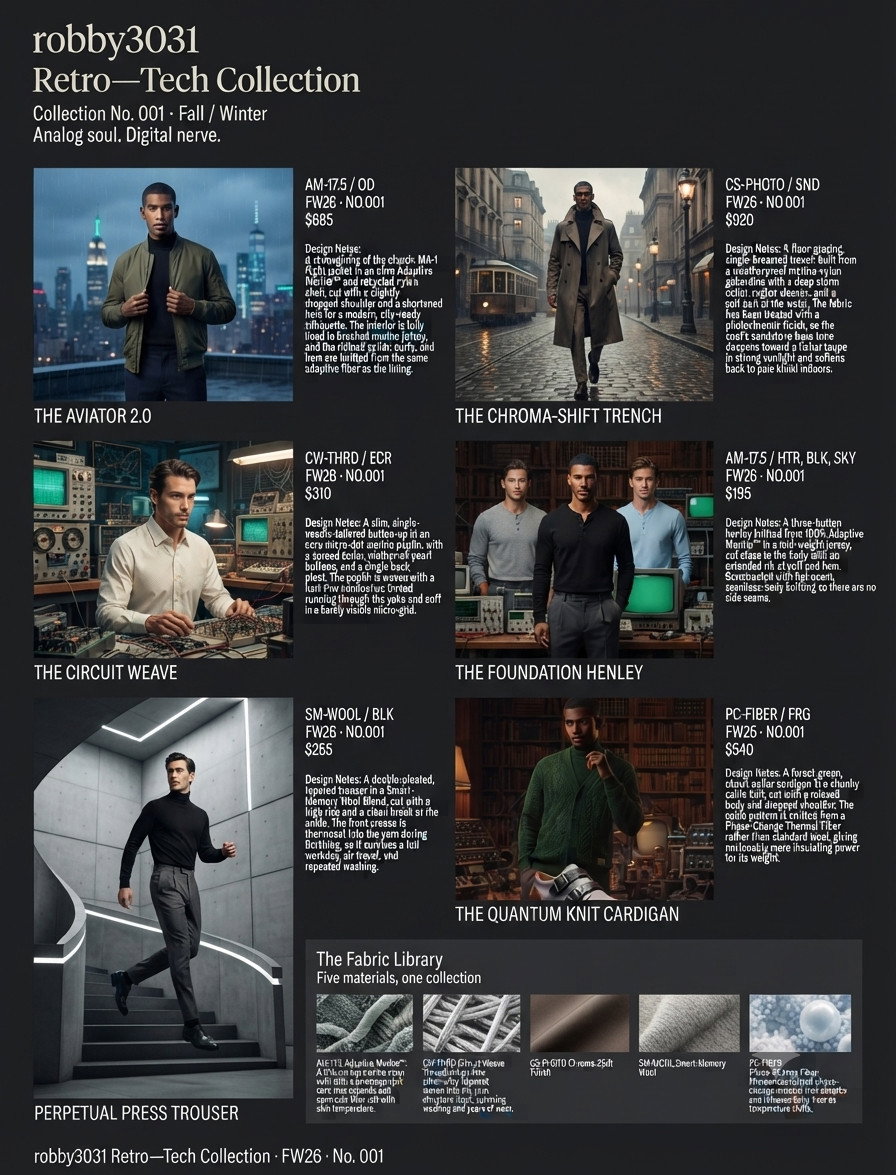
Every contribution goes toward the specialty fabric MOQs, prototyping and the first production run — the three costs that stand between this collection and your wardrobe.
Rewards, tiers and shipping details are confirmed directly with backers after the campaign closes.
Premium garments that feel classic at a distance and engineered up close.
Disclaimer: All cost figures are estimated and may adjust with supplier quotes, minimum order requirements, and production scale.